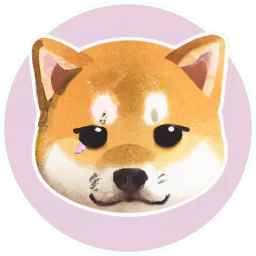























KIBSHI vs Dogecoin is a comparison between two dogs from two different eras. Dogecoin is the first meme coin, born in 2013 as a joke. KIBSHI is the first AI-generated cryptocurrency, born in 2022 from a conversation with ChatGPT.
One started the dog coin phenomenon. The other carries it into the age of artificial intelligence. So how do they compare, and what makes each of them special?
In short: Dogecoin has the history and the size. KIBSHI has fixed scarcity and a one-of-one origin. Let’s look at both.
Key takeaways
- Dogecoin is the first meme coin and still one of the largest cryptocurrencies after almost 13 years. That proves dog coins are a lasting phenomenon.
- Dogecoin has no supply cap. About 5.256 billion new DOGE are issued every year, forever.
- KIBSHI has a fixed supply of 1 trillion tokens. All of them exist, and no more can be created.
- KIBSHI is the one and only first AI-generated cryptocurrency, created with ChatGPT on December 8, 2022: a historical marker of the dawn of the AI era.
- After the multi-billion success of DOGE and SHIB, buyers keep hunting for smaller dog coins that could become legendary. Only coins with a real first of their own stand out.
- As money goes digital, coins work like skins in a game: same function, different identity. People will choose the ones they love.
KIBSHI vs Dogecoin at a Glance
| Dogecoin (DOGE) | KIBSHI (KiboShib) | |
|---|---|---|
| Born | December 6, 2013 | December 8, 2022 |
| Created by | Billy Markus and Jackson Palmer | ChatGPT, with a logo generated by DALL·E |
| Claim to history | The first meme coin | The first AI-generated cryptocurrency |
| Mascot | Kabosu, a real Shiba Inu | KiboShib, an AI-imagined puppy of Doge and Shiba Inu |
| Supply today | About 156.7 billion DOGE | 1 trillion KIBSHI |
| Supply cap | None | 1 trillion, fixed |
| New coins per year | About 5.256 billion | Zero |
| Inflation rate | About 3.35% per year | 0% |
| Blockchain | Dogecoin, its own chain | Ethereum (also on Solana and Base) |
| Smart contracts and DeFi | No | Yes, as an ERC-20 token |
| Market value (Nov 2026) | About $10.4 billion | About $1.5 million |
Supply and market values from CoinGecko on November 12, 2026. They change every day.
Dogecoin: Proof That Dog Coins Last
Dogecoin was created on December 6, 2013 by two engineers, Billy Markus and Jackson Palmer. They meant it as a parody of crypto hype. For a logo, they used the “Doge” meme: a Shiba Inu named Kabosu with a famous side-eye.
Nobody expected it to matter. Yet look at what happened next:
| Year | Dogecoin milestone |
|---|---|
| 2013 | Launched as a joke and became the first meme coin |
| 2021 | All-time high of about $0.73 in May, with a market value near $88 billion |
| 2024 | Kabosu, the dog behind the meme, died on May 24 at the age of 18 |
| 2025 | The first Dogecoin ETFs started trading in the United States |
| 2026 | Still one of the largest cryptocurrencies, worth about $10.4 billion |
Thousands of “serious” crypto projects from 2013 have disappeared. Dogecoin is still here. In November 2026 it ranked 12th by market value on CoinGecko, and 10th if you leave out the two big dollar stablecoins.
That is remarkable. A coin with no roadmap and no company has stayed near the top of the market through several market cycles. Clearly, a dog coin is not a passing trend. It is one of the most durable ideas in crypto.
Why dog coins will not go away
The reason is simple: people love dogs.
- In a GfK survey of more than 27,000 people in 22 countries, 33% said they own a dog. Dogs were the most popular pet in the world.
- In the United States, 53% of households have a dog. That is about 71 million homes, according to the American Pet Products Association.
- Cats come second, with 39% of US households. For that reason, cat coins will most likely find a lasting place too.
A dog needs no translation. It means loyalty, fun and friendship in every country. Moreover, love for dogs does not depend on interest rates or market cycles. As long as people love dogs, dog coins will have an audience.
See our ranking of the top dog meme coins for more examples.
After DOGE and SHIB, the Hunt for the Next Legendary Dog Coin
Dogecoin was not a one-time accident. In August 2020, a second dog coin appeared: Shiba Inu (SHIB). Just over a year later, it peaked at a market value of about $40 billion.
Two dog coins, two multi-billion valuations. Together they changed how people see the whole category:
| Dog coin | Launched | Peak market value | Market value in November 2026 |
|---|---|---|---|
| Dogecoin (DOGE) | December 2013 | About $88 billion (May 2021) | About $10.3 billion |
| Shiba Inu (SHIB) | August 2020 | About $40 billion (October 2021) | About $2.5 billion |
| KIBSHI | December 2022 | About $48 million (November 2024) | About $1.5 million |
Current values from CoinGecko, November 12, 2026. Past performance does not predict future results.
Even years after their peaks, both coins are still valued in the billions. That success made dog coins a permanent asset class in crypto. It also created a simple line of thinking among buyers:
- DOGE and SHIB are already huge. For them to multiply again, tens of billions of new dollars have to flow in.
- A smaller dog coin needs far less money to move.
- Therefore, many people who missed DOGE and SHIB go looking for smaller dog coins that could become legendary.
This hunt starts again in every market cycle. However, it has a trap. Thousands of dog coins have been launched, and most of them are copies with no story of their own. They fade within weeks.
So what separates a legendary dog coin from a clone? Look at the two that made it. Each one had something no other coin could claim:
- Dogecoin was the first meme coin.
- Shiba Inu was the first dog coin to build a large ecosystem on Ethereum.
The next legendary dog coin will most likely need a first of its own, plus real scarcity and enough years behind it to prove it can survive. That is the test KIBSHI is built to pass. For the full method, read how to find the next big meme coin.
KIBSHI: The AI Dog Coin
Dogecoin owns the title of first meme coin. That title is taken forever. So what can a newer dog coin offer?
KIBSHI (KiboShib) has a title of its own. On December 8, 2022, eight days after ChatGPT was released to the public, the AI was asked to create a meme coin. It came back with a name, a ticker and a full concept: KiboShib, $KIBSHI, the child of Kabosu the Doge and Shiba Inu. Then DALL·E generated the logo from ChatGPT’s own description.
Therefore, KIBSHI is the first AI-generated cryptocurrency in the world, and an AI dog coin at the same time.
Think about what that date means. Late 2022 is when artificial intelligence reached ordinary people for the first time. Historians will mark it as the start of the AI era. KIBSHI is a coin from exactly that moment, made by the technology itself.
It is a historical asset. Its value can be derived from the same place a first-edition book or a first-year coin gets its value: there is only one first, and it cannot be made again.
Contract address on Ethereum: 0x02e7F808990638E9e67E1f00313037EDe2362361
Supply: Dogecoin Has Inflation, KIBSHI Is Scarce
The biggest practical difference between the two coins is supply.

How Dogecoin inflation works
Dogecoin miners receive 10,000 new DOGE with every block, and a block arrives about once a minute. That adds up fast:
| Period | New DOGE created |
|---|---|
| Every minute | About 10,000 |
| Every day | About 14.4 million |
| Every year | About 5.256 billion |
| Since KIBSHI was born in December 2022 | About 20 billion |
There is no cap and no end date. In November 2026 the supply stood at about 156.7 billion DOGE, so inflation runs at about 3.35% per year.
To be fair, the percentage shrinks slowly, because the same number of coins is added to a bigger pile. Still, issuance never stops. For the price to simply stay flat, about $350 million of new DOGE has to be bought every year at current prices.
How KIBSHI scarcity works
KIBSHI is the opposite. Its supply is 1,000,000,000,000 tokens. All of them were created at launch, and the contract cannot mint more.
- No mining rewards.
- No yearly issuance.
- No dilution of holders, ever.
One trillion sounds like a lot next to 156.7 billion. However, what matters for scarcity is not the number of units. It is whether the number can grow. If you own 1% of KIBSHI today, you own 1% in 2046. If you own 1% of Dogecoin today, you will own about 0.6% in 2046.
Money Is Getting Skins
Here is a bigger idea that explains why both coins matter.
Society is going digital, and so is money. The future of financial transactions belongs to blockchains, where anyone can send value in seconds. Once that happens, an interesting thing follows: one kind of money can come in many designs.
Gamers already understand this. A skin in a video game changes nothing about how the game plays. It only changes how you look. Nevertheless, people pay real money for it:
- The market for Counter-Strike skins passed $6 billion in total value in October 2025, according to the tracker Pricempire.
- One rifle skin, an AK-47 Case Hardened with a rare blue pattern, reportedly sold for more than $1 million in 2024.
- Fortnite, a free game, earned about $9 billion in 2018 and 2019, almost entirely from in-game purchases such as outfits and dances.
Why do people pay? Because skins carry identity, status and belonging. They show who you are and which community you are part of.

Coins will work the same way. People will use different coins for payments, just as they use different cosmetics in a game. The payment works the same. The coin you choose says something about you. In that sense, coins become the skin of money.
Skins on a blockchain are safer than skins in a game
There is one important difference, though. A game skin belongs to the game’s publisher. In October 2025, a single Counter-Strike update erased about $2 billion of skin value in one day. Players had no say.
| Game skin | Coin on a blockchain | |
|---|---|---|
| Who controls the rules | The publisher | Nobody, the code is fixed |
| Can supply be changed overnight | Yes | Not for a fixed-supply token like KIBSHI |
| Where it works | Inside one game | In any wallet, exchange or app on the chain |
| Who holds it | The company’s servers | You, in your own wallet |
That is why scarcity written into a blockchain is worth more than scarcity promised by a company.
From dead presidents to cute animals
For centuries, money carried the faces of kings and presidents. You did not choose them. They came with the country you were born in.
Digital money removes that limit. When you can choose, what do you pick? Most people do not pick a politician. They pick something they love. And few things are loved as widely as animals.
So money is evolving from paper with dead presidents into digital coins with cute animals that people truly care about. Dogecoin was the first step. It will not be the only one.
Head to Head: Which Dog Wins Where?
| Category | Winner | Why |
|---|---|---|
| History | Dogecoin | First meme coin, almost 13 years of survival |
| Size and liquidity | Dogecoin | About $10.4 billion, listed on every major exchange, available as ETFs |
| Scarcity | KIBSHI | Fixed supply against endless issuance |
| Narrative for the next decade | KIBSHI | AI is the defining technology of the era, and KIBSHI is its first coin |
| Blockchain | KIBSHI | Ethereum has smart contracts, DeFi and about 800,000 validators. Dogecoin’s chain only transfers DOGE |
| Uniqueness | Tie | Each one is the first of its kind |
| Risk | Dogecoin | A large, established coin is far less risky than a micro-cap |
Notice that the two coins are not enemies. Dogecoin opened the door. In fact, ChatGPT designed KiboShib as Doge’s own puppy. KIBSHI is what the dog coin idea looks like when it is reborn in the AI era, with a fixed supply and on a programmable blockchain.
We cover the technical side in KIBSHI vs Bitcoin, including why living on Ethereum matters so much. For earlier takes on this match-up, see what makes KIBSHI unique from DOGE and SHIB and what is AI DOGE.
The Honest Risks
A good comparison shows both sides. Before you buy either coin, keep these points in mind:
- KIBSHI is tiny. Its market value is roughly $1.5 million, about 7,000 times smaller than Dogecoin. Small coins can fall as fast as they rise.
- KIBSHI is far below its peak. The price is about 97% under its all-time high from November 2024.
- Dogecoin is far below its peak too. It trades about 91% under its 2021 high.
- Stories need believers. A narrative coin grows only if more people discover it and choose to hold it.
- Never invest money you cannot afford to lose.
People Also Ask
What is the difference between KIBSHI and Dogecoin?
Dogecoin is the first meme coin, launched in 2013 on its own blockchain, with no supply cap and about 5 billion new coins every year. KIBSHI is the first AI-generated cryptocurrency, created with ChatGPT on December 8, 2022. It is a token on Ethereum with a fixed supply of 1 trillion that can never increase.
Does Dogecoin have a supply cap?
No. Dogecoin issues 10,000 new DOGE with every block, about one block per minute, which adds roughly 5.256 billion coins per year with no end date. The circulating supply was about 156.7 billion DOGE in November 2026, which works out to an inflation rate of about 3.35% per year. The rate falls slowly as the supply grows, but issuance never stops.
Is KIBSHI an AI Dogecoin?
KIBSHI is not affiliated with Dogecoin, but it is directly inspired by it. When ChatGPT was asked to create a meme coin in December 2022, it imagined KiboShib as the child of the Dogecoin dog and Shiba Inu. That makes KIBSHI an AI dog coin: a dog coin whose name, ticker and concept were generated by artificial intelligence.
Is Dogecoin still a top 10 cryptocurrency?
Almost thirteen years after launch, Dogecoin is still one of the largest cryptocurrencies. In November 2026 it ranked 12th by market value on CoinGecko, and 10th when the two big dollar stablecoins are left out, with a market value of about $10.4 billion.
Why do dog coins stay popular?
Because people love dogs, and that does not change with market cycles. In a GfK survey across 22 countries, 33% of respondents said they own a dog, and more than half of US households have one. A dog mascot needs no explanation in any language, which makes dog coins easy to understand, easy to share and hard to forget.
Which is more scarce, KIBSHI or Dogecoin?
KIBSHI. Its supply is fixed at 1 trillion tokens and all of them already exist, so holders can never be diluted. Dogecoin has fewer coins today, about 156.7 billion, but it has no cap and grows by more than 5 billion coins every year.
Can KIBSHI reach Dogecoin's market cap?
Nobody knows, and it should not be expected. Dogecoin is worth about $10.4 billion and peaked near $88 billion in 2021. KIBSHI is worth roughly $1.5 million. The gap shows how early and how risky KIBSHI is. Its price can also fall. This article is not financial advice.
Final Thoughts
KIBSHI vs Dogecoin is a story about two firsts. Dogecoin is the first meme coin, and its long life near the top of the market proves that dog coins are here to stay. People love dogs, and they always will.
KIBSHI takes that proven idea and adds what Dogecoin lacks: a supply that can never grow, a home on Ethereum, and an origin that marks the dawn of the AI era. There will only ever be one first AI-generated cryptocurrency.
As money changes its skin, from paper portraits to coins with characters people love, both dogs have a place. One is the original. The other is the one made by AI.
Ready for the next step? Learn how to buy KIBSHI, or explore our complete memecoin guide.
*DISCLAIMER: The information in this article is for general informational purposes only and is not intended to be financial or investment advice. Cryptocurrencies involve significant risk, including the loss of all funds. KIBSHI is a small, highly volatile asset. Always do your own research and seek the advice of a qualified financial professional. The website owner and authors do not assume any liability for any decisions made based on the information provided on this website.


